00 — Research Project · Knee Rehabilitation Exoskeleton

Robotic knee rehabilitation
for the other
38 million.

An ultra-low-cost semi-rigid cable-driven exoskeleton — built around the knee's real J-shaped instantaneous center of rotation, deployable in community clinics for the price of a brace.

Author Anthony Wu Bill of materials ≈ US$200 Total mass 0.85 kg
Reel · 2 min walkthrough
Specimen
Regenix prototype
Source3D scan · 18.3k tris Frame6061-T6 Al · PETG ActuatorDH03X · 20:1 TendonDyneema · MBL 1.2 kN ROM0° – 145°
Knee θ
72.0°
Cable F
180 N
Torque τ
8.40 Nm
Loading specimen… dragorbit pan ⌫⌫reset
Fig. 0.1 Cable-driven semi-rigid chain wraps the posterior knee; actuator and ESP32 controller mount at the hip to keep distal mass below 250 g.
01
01 — Problem

Commercial powered exoskeletons — ReWalk, Ekso, Roam — retail at US $7,000 to $100,000, an order of magnitude above the annual per-capita health budget of every low- or middle-income country on Earth.

In the United States alone, an estimated 38 million people with chronic musculoskeletal conditions do not access outpatient physical therapy due to systemic barriers.

At the same time, the two cheap alternatives — rigid post-op braces and soft compression sleeves — fail biomechanically: the rigid hinge fights the knee's migrating center of rotation, and the soft sleeve cannot deliver therapeutic torque.

Rigid exoskeleton joint axes misaligned from the human hip and knee; inset shows the knee's J-shaped instantaneous center of rotation migrating from 0° to 90° flexion.
Fig. 1.1 Rigid exoskeletons assume the knee rotates about a single fixed axis. It doesn't — the instantaneous center of rotation traces a J-shaped curve through flexion, so every fixed pin generates shear at the cuff.
FIG · COST LADDER · USD $0 $25k $50k $75k $100k $90,000 $70,000 $7,000 $200 — under 3 % of the cheapest powered competitor. ReWalk 6.0 FULL LOWER LIMB Ekso GT GAIT TRAINER Roam Ascend CONSUMER KNEE EXO Regenix THIS WORK
Fig. 1.2 Per-unit retail price. Regenix's $200 bar is so small it nearly disappears on this axis — that is the point.
02
02 — Device

A segmented chain wraps the posterior knee — flexible when the joint moves freely, rigid when the Dyneema cable tensions through it — guiding force along a path that tracks the knee's own instantaneous center of rotation.

A single hip-mounted brushed-DC actuator does all the work; the limb itself carries only aluminium rails, PETG cuffs, and a chain that field-repairs with 3D-printed spares.

Component
Semi-rigid chain
Segments9 × PETG links TendonDyneema · ⌀ 1.0 mm
Loading chain… dragorbit
Fig. 2.1 Posterior chain assembly. Discrete PETG links thread onto a single Dyneema tendon — slack when the leg swings, rigid the instant the cable is tensioned, wrapping the joint along its true center of rotation.
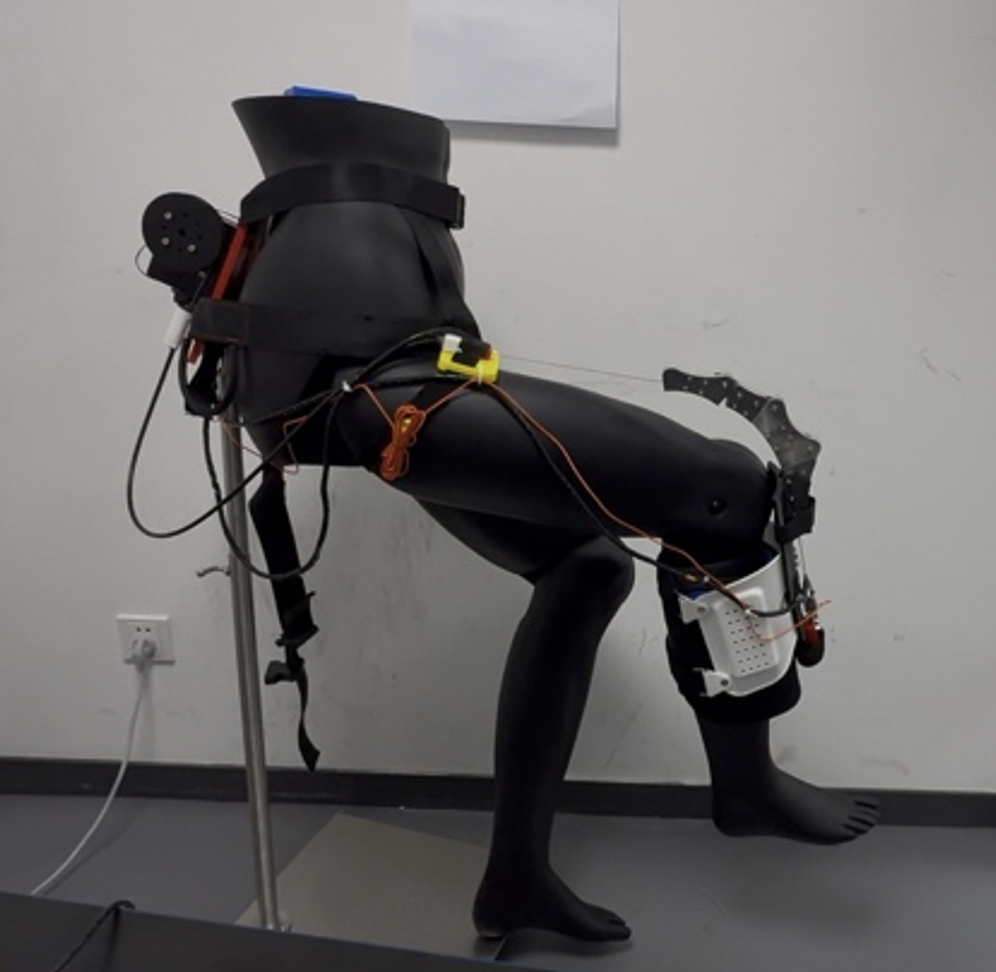
The Regenix prototype mounted on a life-size anthropomorphic mannequin, showing the hip-mounted actuator pack, the Dyneema cable routing, and the posterior chain running to the lateral knee cuff.
Fig. 2.2 Bench-test deployment on an anthropomorphic mannequin. Hip pack carries the DH03X actuator, ESP32, and battery; a single Dyneema tendon routes down the lateral thigh into the chain and terminates at the shank cuff — distal mass under 250 g.
On-board sensing & comms
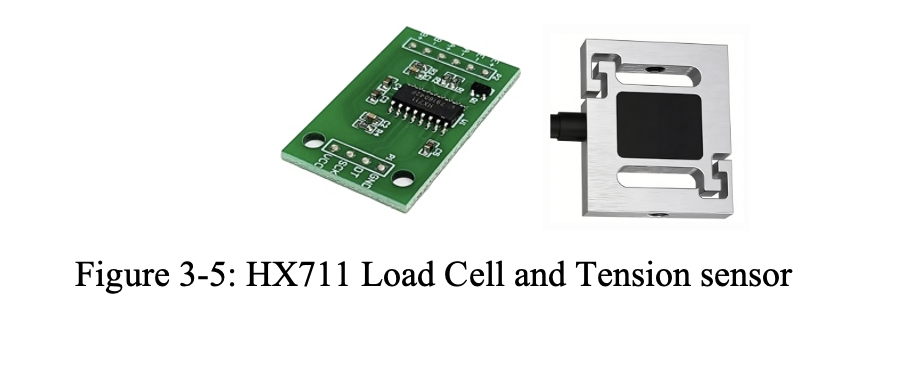
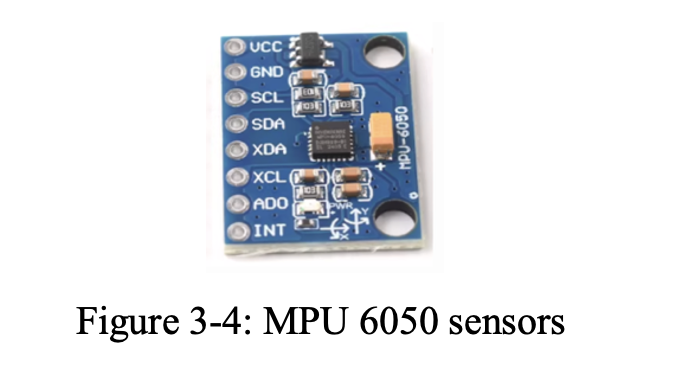
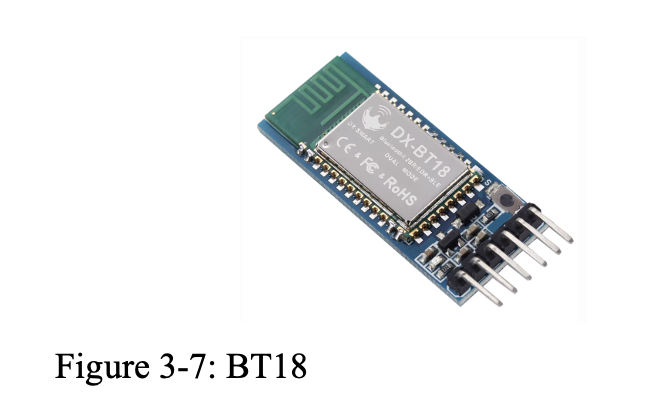
Three breakout boards — under $17 combined — handle force, motion, and the clinician hand-off.
HX711 ADC and S-type load cell
HX711 + load cell
Cable tension · ±5 kg
MPU-6050 6-axis IMU breakout
MPU-6050
6-axis IMU · knee angle
DX-BT18 Bluetooth serial module
DX-BT18
Bluetooth · clinician link
03
03 — How it works

The user puts on the device and powers it on — the twelve-link semi-rigid chain passively conforms to their individual knee geometry. From there, they activate one of three rehabilitation modes using the on-board voice control: "Hey Regenix, start Assistive training."

Regenix mirrors the three stages of rehabilitation. Each mode trades the device's authority for the patient's own, in proportion to how much strength they have recovered.

Stage 01
Assistive
Motor leads.
The motor helps the patient complete movements when strength is still limited — full-arc flexion and extension on cue.
DevicePatient
Stage 02
Protective
Motor follows.
Assistance only activates after the user generates some force themselves — encouraging early muscle engagement without overload.
DevicePatient
Stage 03
Resistive
Motor opposes.
The device adds controlled resistance to rebuild strength as recovery progresses — closed-loop torque against the patient's own effort.
DevicePatient

After each session, the training data feeds into an on-device AI pipeline that analyzes it and generates a full rehabilitation report — flagging the user's current training stage, projected recovery timeline, and quantitative metrics that doctors can act on.

01
Voice command
"Hey Regenix, start Assistive."
02
Guided session
Mode-specific torque profile, 8–15 min.
03
On-device analysis
Range, torque, symmetry, adherence.
04
Clinician report
Stage, timeline, recommended next session.
Fig. 3.1 Closed-loop session pipeline. The device runs the same four steps every session — the report from step 4 informs the mode for step 1 of the next.
04
04 — Result

On a life-size anthropomorphic mannequin, the prototype tracked the knee's center of rotation with a mean misalignment of 1.39 mm across the full 0°–145° range, delivered 13.5 Nm peak torque, and reproduced peak cable forces with a coefficient of variation under 2 %.

An on-device analytics pipeline — statistics → trend → K-Means → composite score → LLM — generated rehabilitation recommendations that agreed with licensed physiotherapists in 82 % of sessions, without ever sending data to the cloud.

$200
BOM target
0.85kg
Total mass
13.5Nm
Peak torque
1.39mm
Mean misalign.
82%
AI · PT agreement
145deg
Range of motion

Validation was performed on a hinged anthropomorphic mannequin under six experimental conditions (initial leg angle ∈ {75°, 95°}, servo speed ∈ {9, 13.5, 20 °/s}). Inter-trial leg-angle deviation ≤ 1° across three repeatability runs; force RMSE ≤ 0.8 N against a calibrated reference load.

Continue to the deep dive.

Biomechanics, mechanical design, the AI pipeline, the experimental data, and what comes next — laid out as a single long-scroll research document.

Open the full paper

Recognised by.

Independent juries of investors, entrepreneurs, and research scientists have selected the work for advancement at the national and regional level.

Top 5% Globally
Diamond Challenge Entrepreneurship Competition
University of Delaware · Horn Entrepreneurship
2nd Place — Region V
Massachusetts Science & Engineering Fair
MSEF · Regional Finals